My Year in Nature | Phenology Wheel
A year-long invitation for families who want to slow down, step outside a little more, and notice the small changes in nature as the months pass, using a phenology wheel designed for families.
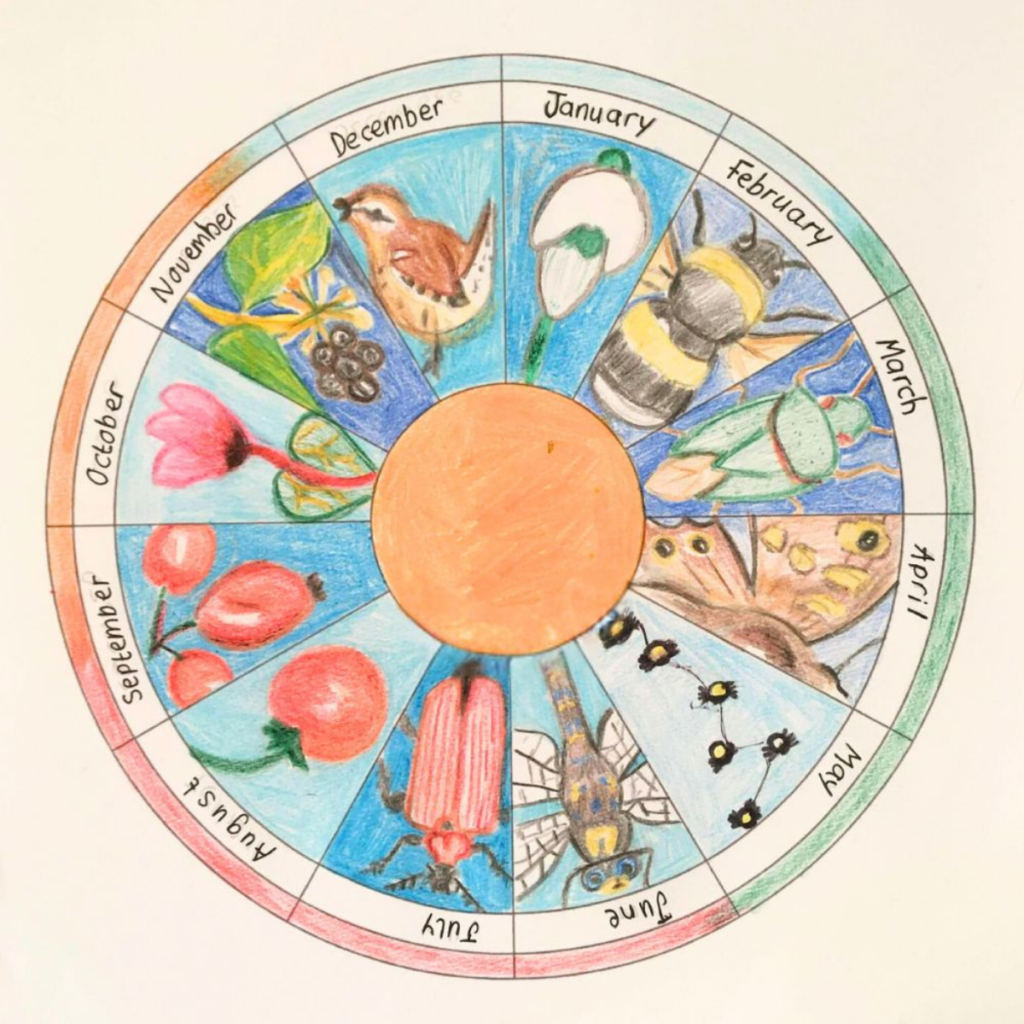
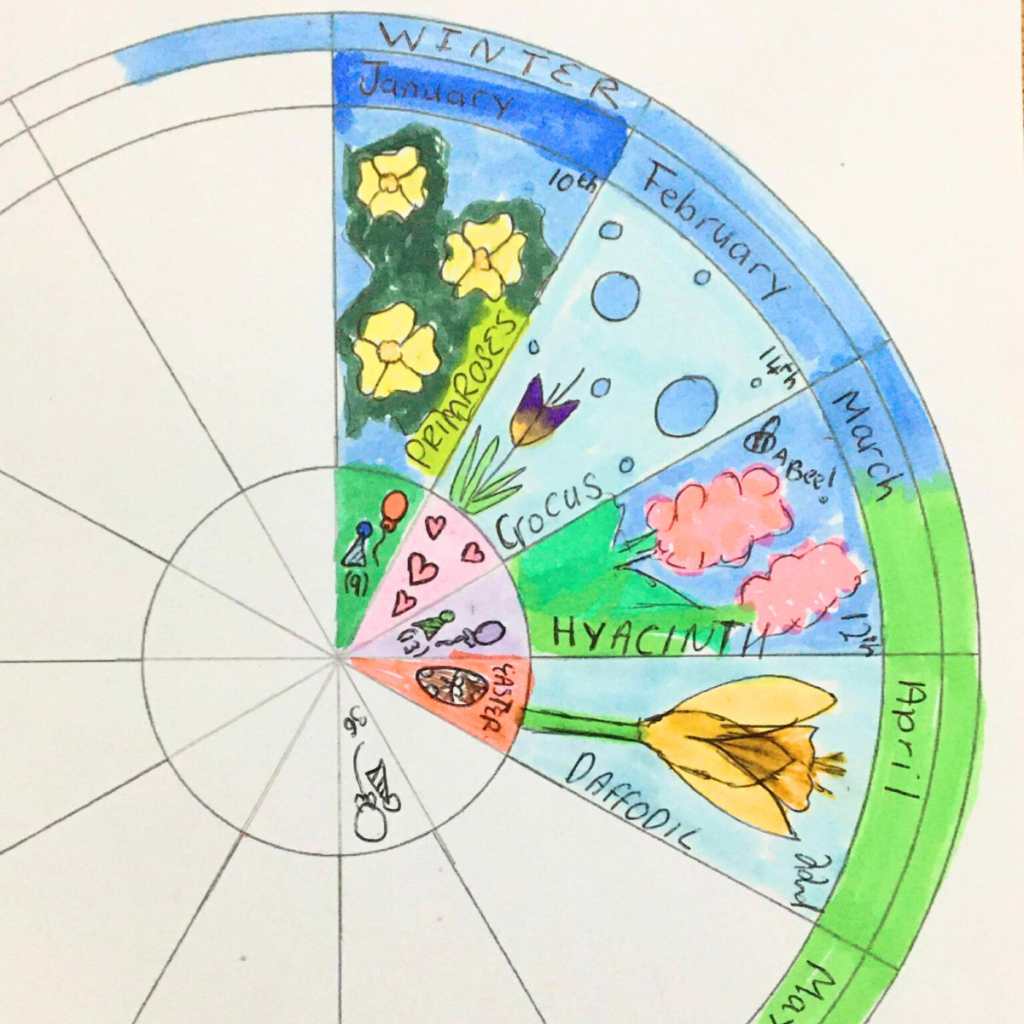
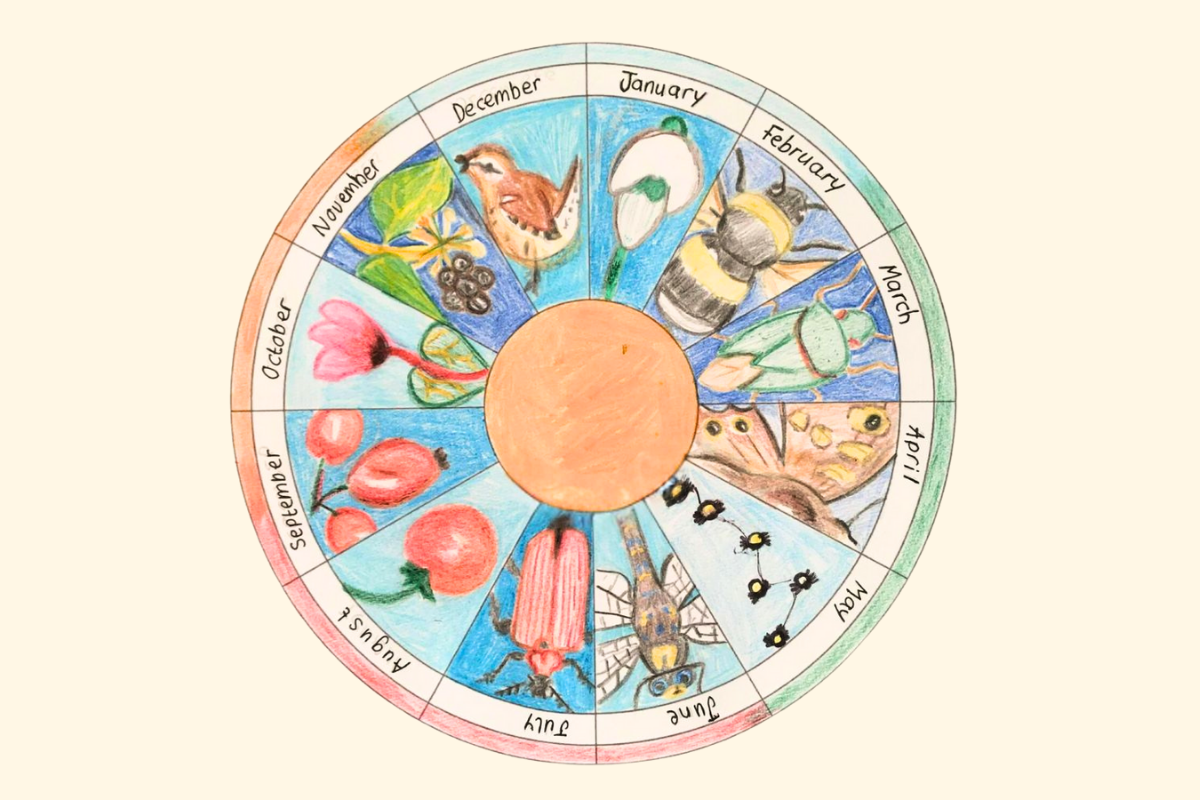
My Year in Nature is a low-pressure project for families who enjoy exploring nature. It’s centred around a phenology wheel, a circular calendar you fill in over time to record what you notice in nature.
There are so many ways you can use it: recording the first flowers to bloom, the birds that visit your garden, a simple calendar of firsts, or anything that catches your attention that month. It’s a simple way to help children notice what’s happening around them and to build a connection with the seasons.
Why We Started My Year In Nature
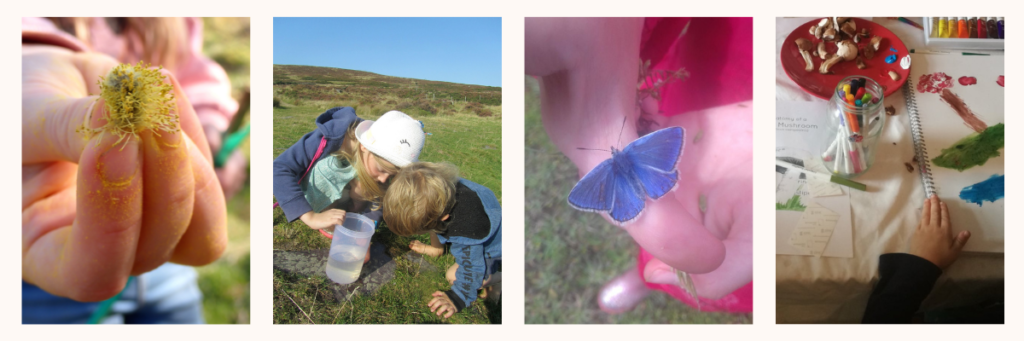
For a long time, we were a family who loved spending time outdoors — gardening, exploring, and noticing nature together. Over the years, that slowly slipped away. Life got busy, work took over, illness crept in, and the time we spent outside became less and less.
Finding an old phenology wheel I’d made with my daughter years ago was a reminder of how much those small moments outdoors had meant to us. It also reminded me how good it felt to simply step outside, slow down, and notice what was around us.
My Year in Nature grew out of that moment. This year for 2026, we are committed to going out, exploring nature and filling in a phenology wheel with at least one seasonal discovery a month.
What Is a Phenology Wheel?
Phenology is the study of seasonal changes in the natural world, such as when plants flower or animals become active.
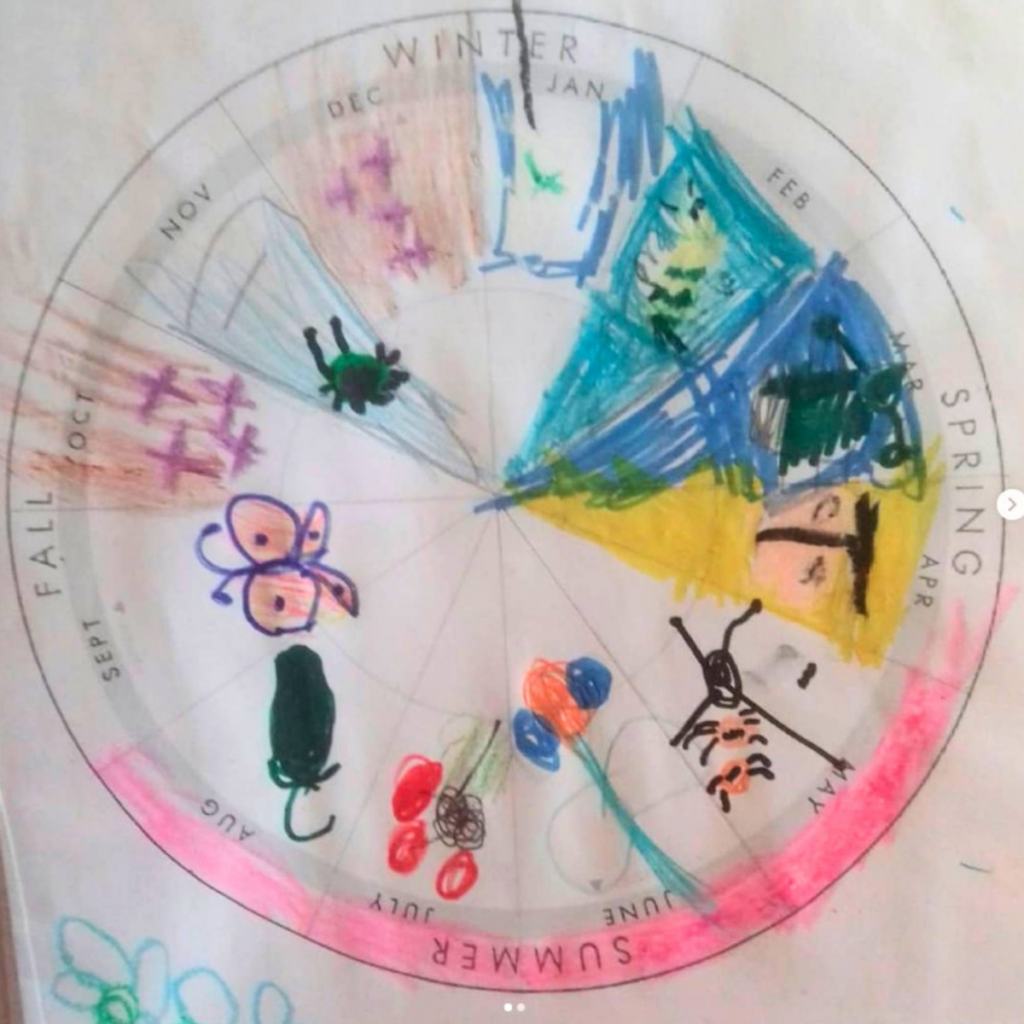
A phenology wheel is a simple, visual way to record these changes over time. It’s usually a circular calendar divided into months, where you add drawings, words, or symbols to show what you notice in nature.
There are many ways to use one. Some families record the first flowers they see, others notice birds or insects, keep a calendar of firsts, or simply draw something that caught their attention that month.
Just one small observation each month is enough.
If you’re interested in learning more about the science behind phenology wheels, or exploring different ways they can be set up and used, Partners in Place has a detailed guide that explains phenology and shares lots of practical examples. It’s a great resource if you’d like to go deeper, but not at all essential for getting started.
You can find it here: Phenology Wheels – Partners in Place
Who My Year in Nature Is For
This project is for families and groups who:
- want a gentle nudge to spend more time outdoors
- enjoy creative, open-ended activities
- have children of any age, including pre-teens and teens
- want nature study without pressure or perfection
How We’re Using It
We’re using our phenology wheel once a month, recording a single meaningful observation. Sometimes it’s a plant or animal, sometimes it’s a sound, or a moment that stood out.
You can start at any time of year. The wheel doesn’t need to begin in January.
An Invitation To Join Us
My Year in Nature isn’t a challenge or a programme to keep up with. It’s a simple way to pause, step outside, and notice what’s already there.
If that sounds like something you’ve been missing, we would love for you to join us.
Noticing Nature In Winter
If you’re looking for something simple to do on a winter walk, especially with younger children, you might enjoy reading about our FREE Signs of Winter Nature Spotter Sheet. It’s a relaxed, print-and-go activity designed to help children notice what’s around them. You can read more about it and download a free copy here.
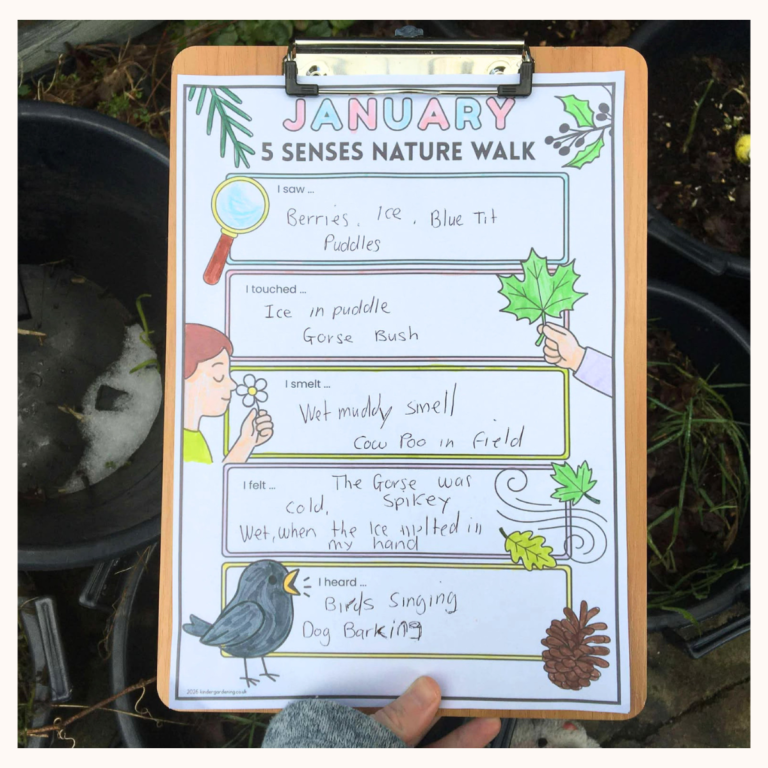
Or I have this 5 Senses Nature Walk in January printable, that is perfect for encouraging children to slow down and explore their natural soundings, using all of their senses, not just their eyes!
Thanks for reading.
Jo